Skip to content
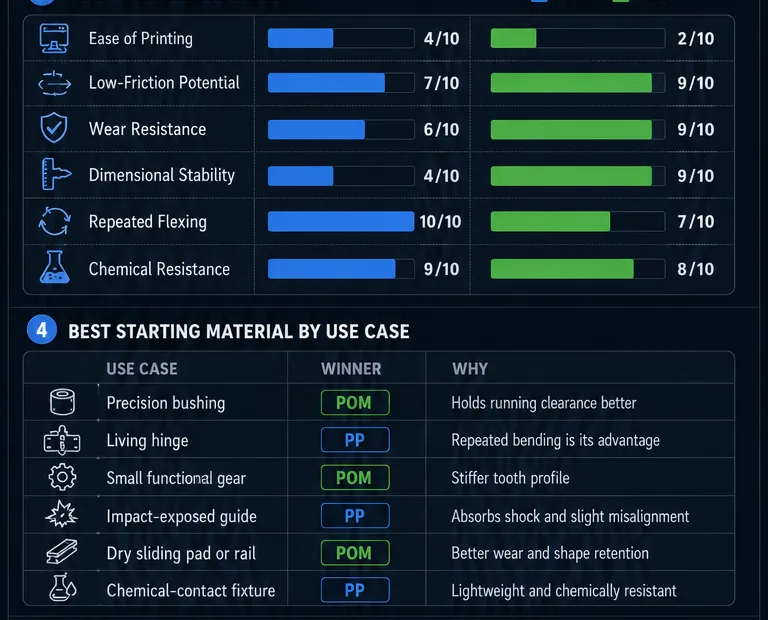
Polypropylene and POM comparison showing differences in low friction, wear resistance, and print challenges in 3D printing.

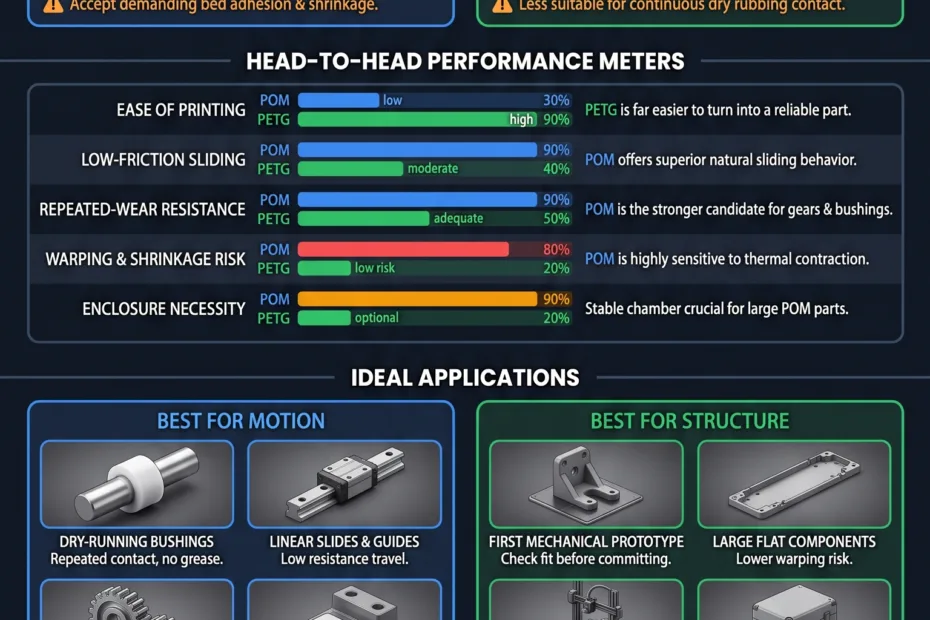
PP vs POM: Low Friction, Wear Resistance and Print Difficulty

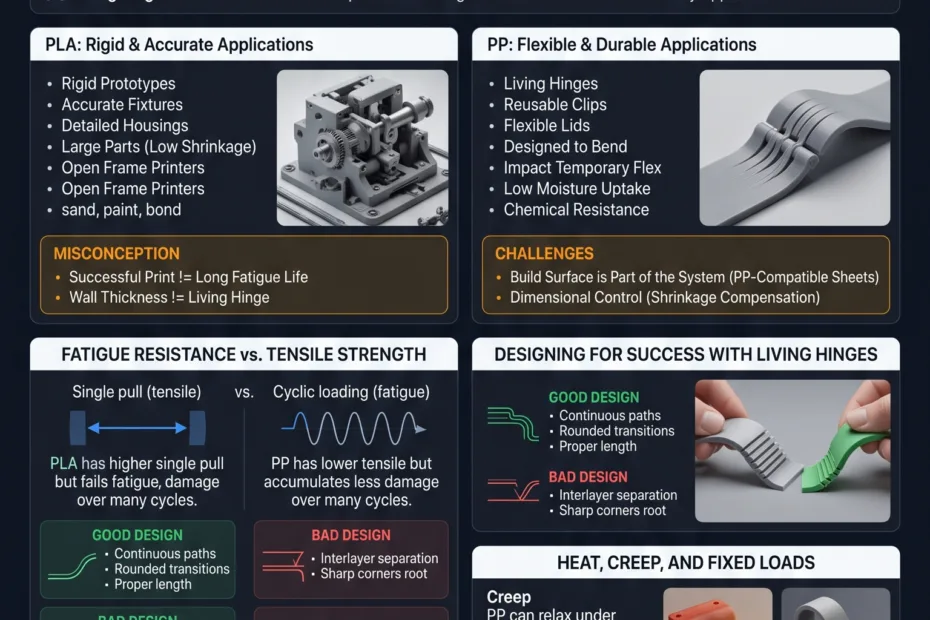
PP is the more flexible, fatigue-resistant option, while POM provides the stiffer and more dimensionally stable sliding surface. POM is usually the stronger starting point for precision bushings, gears, rollers, and guides, but it is… 

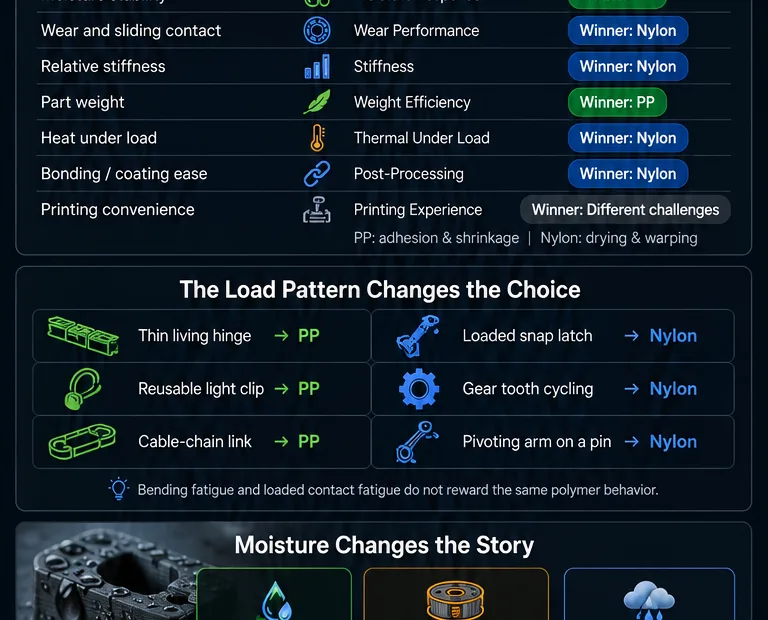
PP and nylon comparison for fatigue resistance, moisture, and functional part applications

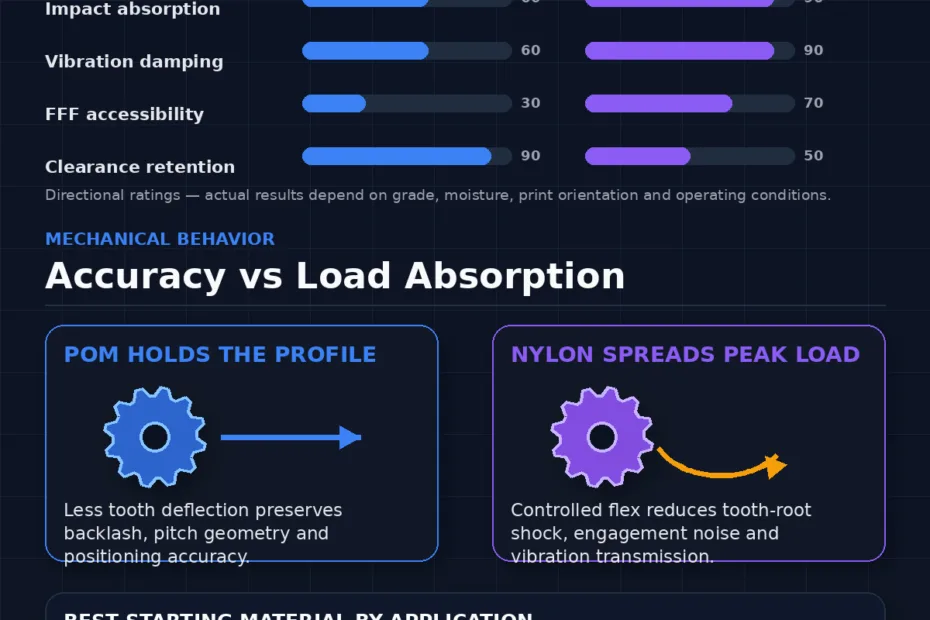
PP vs Nylon: Fatigue Resistance, Moisture and Functional Parts

PP handles repeated bending and wet environments with less property drift, while Nylon is usually the stronger choice for loaded joints, gears, bushings, and wear-prone functional parts. The decision is not simply flexibility versus strength:… 

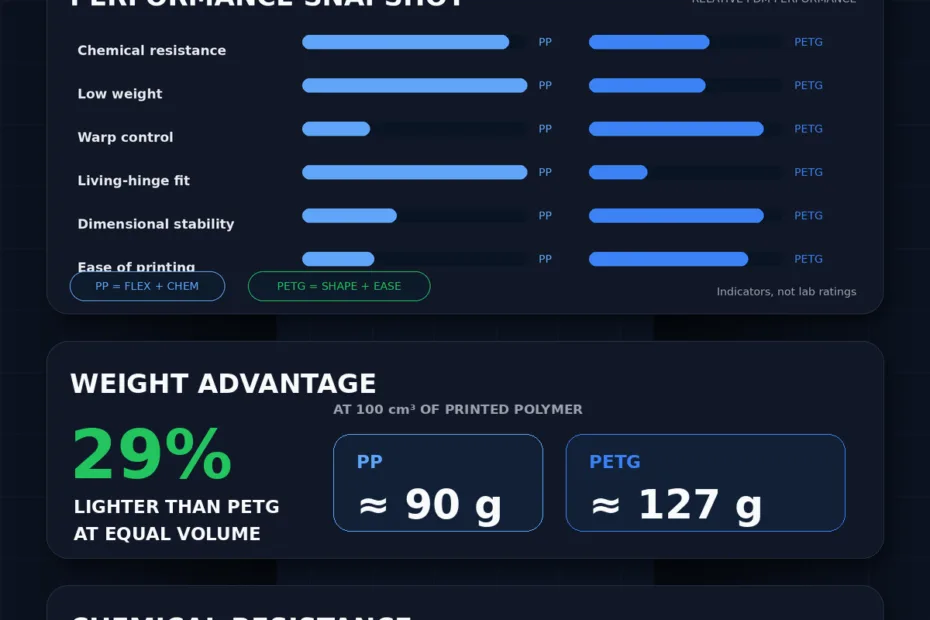
Comparison of PP and PETG showing differences in chemical resistance, weight, warping, and suitability for living hinges.

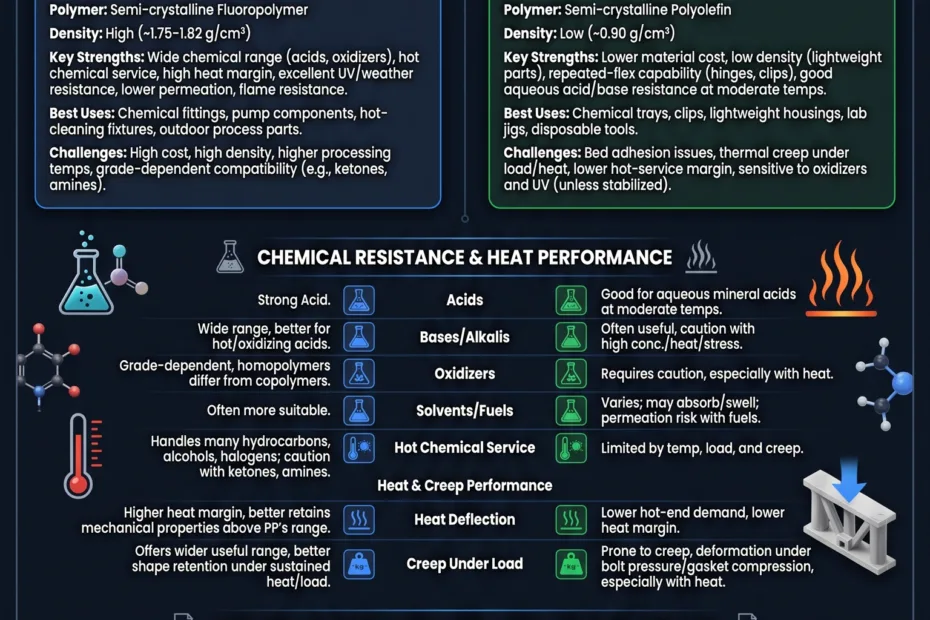
PP vs PETG: Chemical Resistance, Weight, Warping and Living Hinges

PP is lighter, more chemically resistant, and far better suited to repeated living-hinge movement, while PETG is easier to print with lower warping and more predictable dimensional accuracy. The practical choice depends on whether the…